
You know the knot. The one under your shoulder blade that never quite lets go. Or the tight spot in your low back that feels fine after a massage and is right back by Thursday. You stretch it, foam roll it, maybe dig a lacrosse ball into it against the wall. It helps for a bit. Then it doesn't.
That's usually the point where people start asking us about dry needling.
So, what is dry needling?
The name sounds a little intimidating, but the idea is simple. A clinician places a very thin, solid filament needle into a trigger point, which is a tight, irritated band inside a muscle. There's no medication involved (that's the "dry" part). The goal is to get that stubborn spot to release so the muscle can relax, move normally, and stop sending pain signals to everything around it.
If you've ever had acupuncture, the needles look similar. The thinking behind them is different. Dry needling is based on anatomy and how muscles behave, and it's aimed at specific trigger points we find during your exam.
Does it hurt?
Honestly, less than most people expect. The needles are much thinner than the ones used for shots or blood draws, and a lot of patients barely notice them going in. When the needle hits a trigger point, you might feel a quick twitch or a deep ache. That twitch is actually a good sign. It usually means the muscle is letting go.
Afterward, it's normal to feel a little sore for a day or so, kind of like after a solid workout. Many people also notice they can turn their head, bend, or reach more easily right away.
Why we look at the "why" before the "where"
Here's something we tell patients all the time: the spot that hurts isn't always the spot that's causing the problem.
Neck tension can come from how your shoulders sit at a desk all day. Hip and leg pain can trace back to muscles guarding an irritated nerve in the low back. If we only chased the sore spot, you'd feel better for a week and end up right back on the table.
That's why every patient at Elite Spine and Physical Therapy starts with a movement and postural assessment. We watch how you move, check strength and range of motion, and figure out which muscles are overworking and why. Dry needling only goes into the plan if it actually fits what we find.
Who tends to get the most out of it
Dry needling isn't a standalone fix, but it works really well as part of a bigger plan. A few groups we see it help often:
People with nagging back pain. A lot of folks who come to us looking for a back pain chiropractor have already tried stretching and massage. Dry needling can reach deeper muscle layers that hands alone have a hard time getting to.
Desk workers with neck and shoulder tension. If you're looking for a neck pain chiropractor because of headaches or a stiff upper back, releasing the muscles first can make adjustments feel easier and last longer.
Sciatica and nerve-related pain. When a nerve is irritated, the muscles around it often tighten up to protect it. As a sciatica chiropractor, we use dry needling to calm down that guarding so we can address the bigger issue.
Herniated disc recovery. For patients working with a chiropractor for herniated disc care, tight surrounding muscles can add a lot of extra pain. Loosening them can make movement and rehab exercises more comfortable.
Athletes. Runners, lifters, weekend soccer players, and anyone training hard tend to love it. As a sports chiropractor, we use it to help with recovery between sessions and to work out the tight spots that throw off your mechanics.
What a typical visit looks like
Dry needling is rarely the only thing we do in a session. Most of the time it's paired with:
- Spinal adjustments
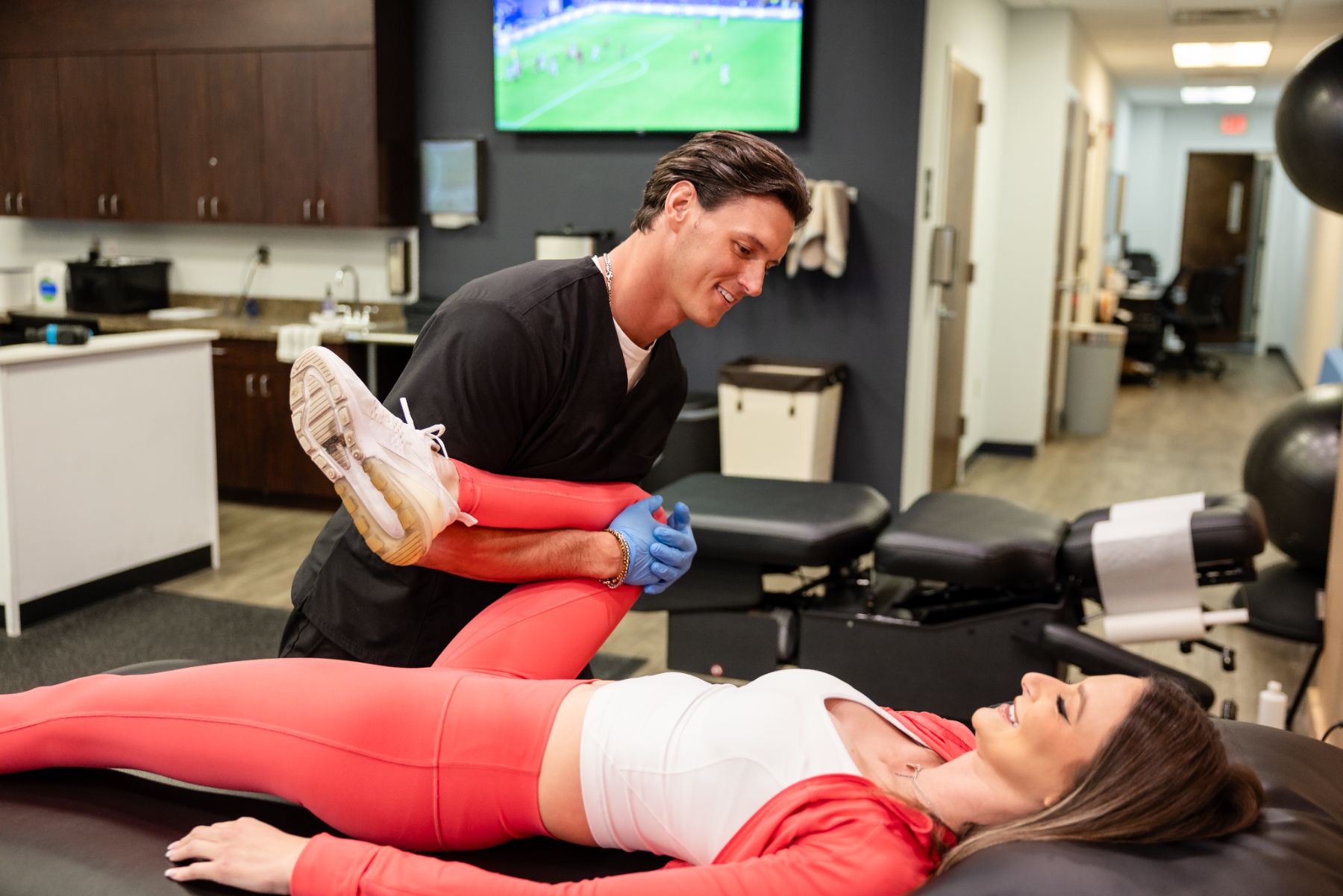
- Hands-on soft tissue work and assisted stretching (like the hip and hamstring work in the photo above)
- Targeted exercises so the muscle stays loose and gets stronger
All of it is one-on-one. You're not being handed off to a machine or left alone on a table while someone juggles three other patients. Your plan is built around your assessment and adjusted as you improve.
Why fall is a good time to deal with it
Something about cooler weather makes tight muscles even tighter. People get a little less active, spend more time sitting, and hold tension in their shoulders against the cold. If you've been putting off that nagging back or neck issue all summer, now is a good time to get ahead of it before winter.
Ready to see if dry needling is right for you?
If you've been searching for a chiropractor Paramus NJ residents trust for thorough, personalized care, we'd love to meet you. We'll start with an assessment, walk you through what we find, and let you know whether dry needling makes sense for your situation. No pressure, no cookie-cutter plan.
Elite Spine and Physical Therapy 37 W Century Rd #111, Paramus, NJ 07652
Request your appointment online and let's get that knot to finally let go.
This article is for general information and isn't a substitute for an individual medical evaluation. Dry needling isn't right for everyone, and your clinician will review your health history before recommending it.